
Winter Birdwatching at Bandh Baretha: A Beginner’s Guide
Oct 26, 2026
Winter Birdwatching at Bandh Baretha: A Beginner’s Guide
The first time you notice a duck’s unusual bill or watch a cormorant disappear underwater, a familiar view of a lake becomes much more interesting. Birdwatching begins with these small discoveries.
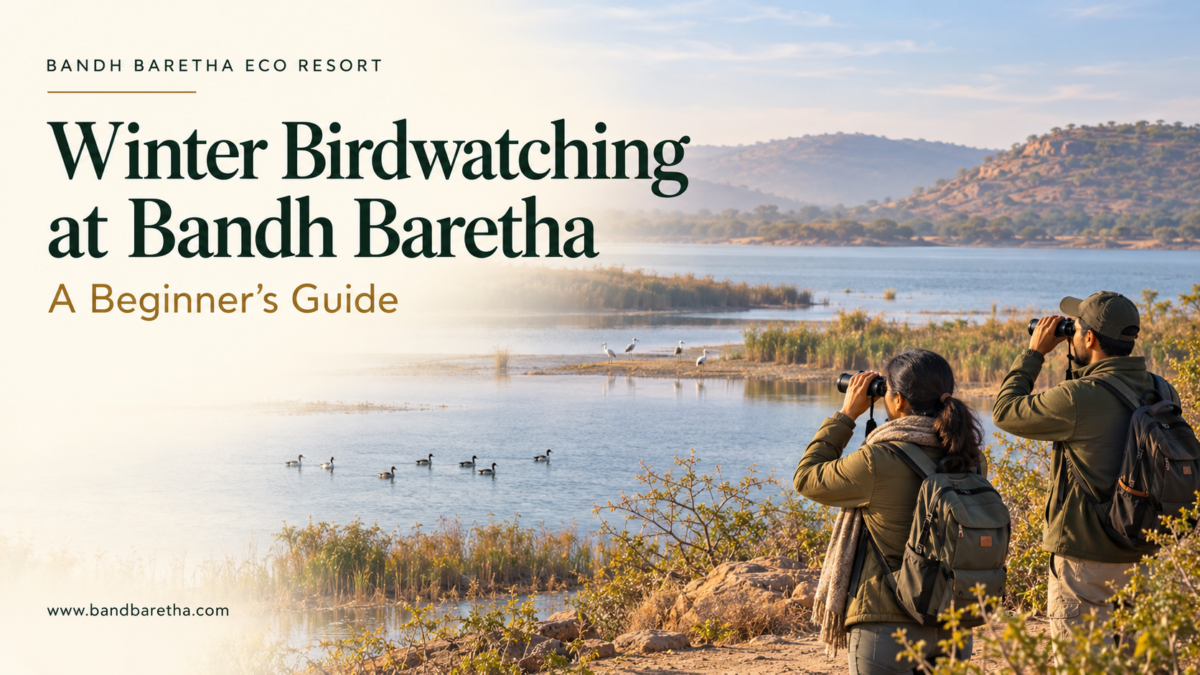
For anyone curious about birds, winter birdwatching at Bandh Baretha offers a reason to slow down and look closely at the landscape around Baretha Dam, near Bayana in Bharatpur, Rajasthan.
A pair of binoculars, a little patience and a short, well-planned outing can help you get started. This guide explains when to plan your visit, which birds to learn about, how to observe them and what to bring.
Why Visit Bandh Baretha for Winter Birdwatching?
Rajasthan Tourism describes Band Baretha as a birdwatching destination with more than 200 bird species, including the elusive Black Bittern. This is a destination-wide diversity figure; your own sightings will depend on the season and conditions.
Winter is particularly interesting for waterbirds. A published study covering 2005–2008 recorded its highest seasonal waterbird diversity in winter, with 53 species. These historical findings explain the site’s winter importance without predicting what will be present on a particular visit.
For beginners, the reservoir provides an opportunity to compare birds swimming, diving and feeding in different ways. Watching those differences is a useful first step towards recognising species.
When Should You Plan Your Visit?
November to March is a useful broad planning window, subject to local conditions. The published reservoir study used these months for its winter surveys, while Rajasthan’s tourism guidance identifies the cooler part of the year as a comfortable visiting season.
Before choosing a date, ask about recent sightings, water conditions and visitor access. Bird numbers and locations change, so current local information is more useful than a photograph from an earlier year.
Plan your first session after daylight and within permitted visiting hours. If fog limits visibility, allow the morning to clear. Keep your schedule flexible enough to spend time at a productive viewing point.
For a wider introduction to the destination, read our Bandh Baretha Travel Guide.
Six Birds to Learn About Before You Go
The following species have historical winter records from the reservoir. Use them as a starting point for learning, then ask a knowledgeable local observer which birds have been seen recently.
| Bird | A useful identification clue |
|---|---|
| Northern Shoveler | Look for the unusually broad, flattened bill |
| Northern Pintail | Notice the slender shape; adult males have a long, pointed tail |
| Eurasian Coot | A dark waterbird with a contrasting white bill and forehead shield |
| Little Cormorant | A dark diving bird, sometimes seen resting with its wings spread |
| Indian Spot-billed Duck | Look for the yellow tip on the otherwise dark bill |
| Eurasian Spoonbill | A long-legged white bird with a flattened, spoon-shaped bill |
These clues help narrow down an identification. Compare the whole bird with a field guide, because distance, light and age can affect what you see.
What About the Black Bittern?
The Black Bittern is one of the birds highlighted by Rajasthan Tourism, which also describes it as elusive. Treat it as a possibility to discuss with an experienced birder rather than an expected sighting on your first winter trip.
Spend time enjoying the birds you can observe clearly. Learning to recognise a familiar duck or coot can make your next visit more rewarding.
How to Identify a Bird: Start with Four Clues
When a bird catches your attention, observe it before reaching for a name. Ask four simple questions:
- Size and shape: Is it compact, long-necked, slender or heavy-bodied?
- Colour pattern: Where are the main light and dark patches?
- Behaviour: Is it diving, swimming, standing still or probing the shallows?
- Habitat: Is it on open water, near shoreline vegetation or in a tree?
Keep the bird in view while you gather these clues. Afterwards, compare your observations with a field guide or an identification tool such as Merlin Bird ID. Treat an app’s suggestion as something to check against what you actually observed.
Using Binoculars for the First Time
Binoculars make it easier to study birds from a respectful distance. An 8× pair, including common 8×42 models, can provide a useful balance of magnification and a manageable field of view for beginners.
Practise before the trip. Find a distant object with your eyes, keep looking towards it, then raise the binoculars without moving your head. Adjust the focus until the image is clear.
If you already have access to a suitable pair, start with those. For distant birds on the reservoir, ask a guide whether a spotting scope is available for the outing.
Where Should Beginners Look?
From permitted visitor areas, divide the view into manageable sections:
- Open water: Scan slowly for swimming birds and watch where diving birds reappear.
- Shallow edges: Look for birds standing or feeding close to the shoreline.
- Vegetation margins: Pause and watch for movement rather than walking through the cover.
A slow scan often reveals more than repeatedly changing locations. Choose a comfortable viewpoint, watch quietly, and give yourself time to notice activity.
A Simple Plan for Your First Birdwatching Morning
Allow around two hours for a relaxed introductory session, adjusting the duration to your group and the conditions. This is a suggested plan, not an official tour timetable.
| Part of the outing | Suggested approach |
|---|---|
| First 15 minutes | Settle at a permitted viewpoint and practise focusing your binoculars |
| Next 40 minutes | Observe open-water birds and compare their shapes and behaviour |
| Short break | Rest, have water and review a few observations |
| Next 30–40 minutes | Explore another suitable viewpoint or continue watching a productive area |
| Final 15 minutes | Write notes and review any photographs or uncertain identifications |
An experienced local guide can help you learn the area and recognise birds. Ask about availability, fees, walking distance and any necessary permissions before travelling.
What to Carry
Pack for a quiet outdoor morning:
- Binoculars, if available
- A field guide or useful identification references saved on your phone
- A small notebook and pen
- Comfortable shoes and warm layers
- Drinking water, a hat and sun protection
- A charged phone and optional camera
- A small bag for carrying waste back
A lightweight setup makes it easier to concentrate on observing. A clear memory and a few useful notes can be as valuable as a photograph.
Watch Birds Without Disturbing Them
Good birdwatching gives birds space to continue feeding, resting and moving naturally.
Keep your voice low, stay on permitted routes and avoid approaching birds for a closer photograph. For a beginner outing, keep bird-call playback switched off and observe natural behaviour instead. Leave nesting areas and dense cover undisturbed. These practices follow established guidance on reducing disturbance to birds and their habitats.
If birds repeatedly move away as you approach, give them more space. Follow local instructions and carry all waste out of the viewing area.
Keep a Small Record of Your Visit
Write down the date, time, location, weather and a few details about each bird. For an uncertain identification, describe what you saw: “small dark swimming bird, white bill, feeding near vegetation” is a useful note.
Record a species name only when you are confident. A photograph or description can help you check it later with an experienced birdwatcher. If you use eBird, submit observations that reflect what you actually identified.
Over several outings, your notes will show how your observation skills develop.
Plan Your Visit with Bandh Baretha Eco Resort
Keep the rest of your day unhurried. After a morning outdoors, you may want time for breakfast, lunch or a relaxed conversation about the birds you observed.
Contact Bandh Baretha Eco Resort to discuss meal arrangements, your group’s needs and local activity options. If you would prefer to stay overnight, explore the resort’s stay information and confirm room availability separately.
You can also browse the Bandh Baretha gallery while planning your trip.
Frequently Asked Questions
Can children enjoy birdwatching at Bandh Baretha?
Yes, with a short, supervised outing suited to their age. Simple activities such as comparing bird sizes, watching a diving bird or drawing a bill shape can keep them interested. Include breaks and stay together near the water.
Do I need an expensive camera?
A camera is optional. Binoculars and a notebook are enough to begin learning, and an ordinary phone photograph may help record an observation when the bird is close enough.
What are the entry and guide charges?
Check the current access requirements and any applicable entry, vehicle or guide charges before your visit. Ask the resort team which arrangements it can help with and confirm the inclusions before booking.
Start Your Winter Birdwatching Journey
Your first visit might leave you remembering a duck’s bill, a bird’s diving pattern or a species you finally recognised for yourself. Each observation gives you something to build on next time.
Bring your curiosity, take your time and enjoy discovering the birdlife around Bandh Baretha.
Bandh Baretha Eco Resort
📍 Baretha Dam, Bayana, Bharatpur, Rajasthan
📞 +91 72399 99222 | +91 90247 55738
🌐 www.bandbaretha.com